
Select another country or region to see products specific to your location.
or
Below you can see the language options available in your region.
Cargo Integration

Cargo Integration

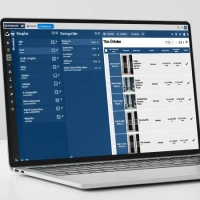
Cargo integration is a service that allows you to automatically manage the shipping processes of e-commerce products sold through the API service provided by the relevant shipping company. This not only saves time and effort but also helps your corporate identity be better perceived. Cargo integration is a process that requires significant software knowledge, so we're glad we have Comwize!

Cargo Integration

What You Need to Know About Cargo Integration

  • Cargo integration is an application that enables the automatic generation of shipment information and cargo barcode data while the order is still in the preparation phase, thus simplifying the process.

  • If you want to print the e-invoice and shipping receipts for the order together or download them in PDF format, shipping integration also provides this convenience.

  • You can also easily print out the shipping receipt you need during the product packaging process.

What are the Stages of the Shipping Integration Process for E-Commerce?

To better understand the integration, it's helpful to take a closer look at the stages of Comwize Cargo integration. These steps are as follows:

  • Orders arriving at your Comwize store are automatically tracked thanks to the integration.

  • Cargo information from incoming orders is collected and forwarded to the cargo company.

  • A cargo barcode is created.

  • You can view this barcode in the order management module in your Comwize software panel.

  • The shipping receipt with the barcode on it is printed out and placed in the order package, and the package is made ready for shipment.

  • When the contracted cargo company receives the package and scans this barcode, a cargo tracking code is generated and recorded in the system.

  • Once all transactions are completed, if cargo notification settings have been made, the customer will be informed via e-mail or SMS.

What are the advantages of cargo integration?

Provides Convenience

The Comwize Cargo integration aims to simplify processes like preparing orders for shipment, tracking shipping progress, and tracking delivery information with significantly less effort. This allows you to manage your process more quickly and seamlessly, eliminating potential confusion due to high order volume.

You Gain Speed

Thanks to the cargo integration, the entire process becomes semi-automatic from the moment an order is created. The new order information appears on the cargo company's screen, allowing the company to make the necessary preparations to deliver the package to your customer. This integration speeds up the process, resulting in much faster results than with manual management.

You Save Money

Without cargo integration, you need manpower to manage the entire process seamlessly. When you add the cost of errors that may arise based on performance to the cost of personnel, the total cost of integration far exceeds your budget. Cargo integration offers the opportunity to save speed and costs.

Corporate Identity

Customers want to track their purchases through the system and ensure these processes are completed as quickly as possible. Thanks to courier integration, they have the ability to monitor every step of the package from the moment it leaves the store. This is a positive development for your company's corporate identity. Your reliability will also make you preferred for future orders.

From the beginning of this article, we've been discussing Comwize e-commerce software and cargo integration. Comwize is Türkiye's first and only e-commerce ERP software. With its numerous automation modules and additional services that differentiate it from its peers, e-commerce companies that choose Comwize also have the opportunity to achieve numerous seamless integrations. Please contact us to learn about the features of this system, which easily integrates with all cargo companies operating in Türkiye, and to take advantage of Comwize's exclusive services.


LATEST BLOG POSTS

What is B2C Warehouse Management, Why is it Important, and How can it be Optimized?

B2C warehouse management encompasses the management of all warehouse processes for e-commerce orders, from goods receipt to shipment. Unlike B2B, it operates in an order-centric manner, requiring the handling of fast shipping expectations and high return rates. Effective management ensures lower costs, faster delivery, and customer satisfaction.

What is B2C Store Management?

B2C store management is the planning, execution, and continuous improvement of all processes from product sourcing to customer delivery for businesses that sell directly to consumers. It encompasses the entirety of product, inventory, ordering, pricing, logistics, and customer service processes; both single-store and chain stores benefit from this structured approach to efficiency.

Warehouse Management Software (WMS): What is it, its features, and how to choose one?

Warehouse operations are among the primary factors directly impacting success in the e-commerce and retail sectors. This dynamic structure, encompassing everything from inventory tracking to order picking, can lead to significant time and cost losses when managed manually. In this article, we examine how businesses can make their warehouse processes more efficient and error-free by digitizing them, and we provide a detailed overview of the advantages offered by modern warehouse management systems and Comwize's software solution in this area.

What is CRM Software? Best CRM Solutions with Comwize

Today, businesses' customer management, sales processes, and marketing strategies have become more complex than ever. CRM software has become a critical tool for companies looking to streamline these complex processes under one roof. Below, we will examine it from a broad perspective, starting from the basic concept of CRM software and ending with how Comwize software integrates and provides advantages.

What is a Shipment Management System?

A shipment management system is software that plans, monitors, and reports the entire logistics process from order departure from the warehouse to delivery to the customer, all from a single platform. It includes loading planning, route optimization, live GPS tracking, and automated post-delivery reporting; when integrated with an ERP and warehouse management system (WMS), the order-shipment cycle is managed from a single dashboard.

Comprehensive Digital Solutions Specific to the Curtain Industry

The curtain and home textile sector has its own dynamics such as product variety, the need for custom production and the importance of visual presentation. Traditional trade models are being replaced by the dynamic and competitive world of online platforms. In this transformation, it is critical for businesses to offer their customers a unique digital experience. Comwize B2C responds to this need as a comprehensive e-commerce platform specifically designed for the curtain and home textile sector.

Setting Up a Curtain Sales Website: A Profitable Guide

A curtain sales website is an e-commerce platform where custom-made curtains and home textile products are sold online. The right infrastructure selection, product images, payment/shipping integration, and inventory management are essential for setup; cost calculation and a sound profit margin strategy are crucial for maintaining profitability.

What is e-export? Why e-export?

E-export is the sale of products and services directly to consumers abroad through digital platforms. Compared to traditional export, it has shorter customs clearance times (24-48 hours), lower investment costs, and is supported by government incentives. Customs duty liability is determined by choosing DDP or DDU type of delivery.

Branding Process

Creating, maintaining, and protecting a brand is the single most important investment for e-commerce businesses. To imprint your brand's character, the products or services you offer, and ultimately increase your sales figures in the short, medium, and long term, you need a well-planned branding process.

How to Choose E-Commerce Software? 10 Criteria

When choosing the right e-commerce software, 10 criteria should be considered: admin panel usability, speed/stability, cross-platform support, module integrity, mobile accessibility, integration capabilities, scalability, data security, support services, and cost/licensing model; these criteria determine the software's suitability for the business's growth.

Customer Service Problems

Shopping on an e-commerce site, by its very nature, means making a purchase without seeing or touching the product. Customers undecided about a purchase often seek answers to their questions either through the information on the website or by contacting customer service in person. Therefore, customer service, which can also be seen as a form of PR, is extremely important.

What is E-commerce? A Comprehensive Beginner's Guide

E-commerce is a digital commerce model that refers to the buying and selling of goods and services over the internet. It has different models such as B2C, B2B, C2C, and D2C; offering advantages such as low cost, 24/7 sales, and wide market access. Getting started requires company formation, selection of sales channels, and product/stock setup.

Opening a Store on N11: Application and Approval Guide

To open a store on N11, you need to be a registered taxpayer, create a seller account, upload the necessary documents (business license/tax certificate, signature declaration for sole proprietorships, etc.), and obtain N11 approval. The approval process takes between a few business days and a week; there are no setup/monthly fees, and a commission is applied after sales, varying according to the category.

Financial Management in E-Commerce

To build a long-term and sustainable e-commerce business and increase your company's profitability, you need to take the right steps regarding financial management. In this article, we've outlined the key points companies looking to build a solid future in e-commerce should be aware of and mindful of regarding financial management.

What is Networking?

Networking is the process of establishing business and friendship relationships with other professionals, employees and potential customers in order to expand the commercial impact of companies and thus convert these people into customers who purchase their products and services.

TürkçeEnglish