
Select another country or region to see products specific to your location.
or
Below you can see the language options available in your region.
Warehouse Management Software (WMS): What is it, its features, and how to choose one?

Warehouse Management Software (WMS): What is it, its features, and how to choose one?

Warehouse operations are among the primary factors directly impacting success in the e-commerce and retail sectors. This dynamic structure, encompassing everything from inventory tracking to order picking, can lead to significant time and cost losses when managed manually. In this article, we examine how businesses can make their warehouse processes more efficient and error-free by digitizing them, and we provide a detailed overview of the advantages offered by modern warehouse management systems and Comwize's software solution in this area.

Warehouse Management Software (WMS): What is it, its features, and how to choose one?

In today's business world, customer satisfaction is directly related to the accurate and timely delivery of products. Warehouse operations, the backbone of this process, are no longer limited to managing physical spaces; with digitalization, they have become much more complex and strategic. At this point, one of the most effective solutions businesses are turning to to increase efficiency, reduce errors, and lower inventory costs is Warehouse Management Software (WMS) .

What is Warehouse Management Software?

Warehouse management software is a digital solution that allows businesses to manage stock, inventory, ordering, and logistics processes from a centralized structure in real time. It not only tracks product inflows and outflows, but also encompasses numerous processes such as product placement on shelves, optimizing order picking routes, assigning warehouse tasks, and analyzing performance. This software is particularly vital for companies operating in e-commerce, retail, manufacturing, and distribution.

The Importance of Digitalization in Warehouse Processes

Manual warehouse management can lead to numerous problems, including inventory errors, product losses, order delays, and logistical disruptions. This not only increases operational costs but also significantly harms customer satisfaction. With a digital warehouse management system, you can:

  • Stock movements can be monitored in real time,

  • Workforce efficiency can be increased by optimizing warehouse routes,

  • Wrong product shipment can be minimized,

  • Return processes can be accelerated,

  • Inter-warehouse transfers can be managed seamlessly.

In short, the digitalized warehouse structure ensures that operations become sustainable and scalable.

How to Transform Your Warehouse Management with Comwize

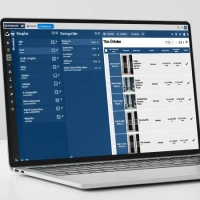
Comwize is a comprehensive software solution that simplifies and accelerates warehouse management with its end-to-end integrated infrastructure. The platform's features support not only daily operations but also long-term strategic planning.

Real-Time Inventory Tracking

Comwize enables location-based tracking of each product. You can instantly view which product is on which shelf, how much stock is in stock, and which order it's reserved for. This prevents overstocking or shortages.

Shelf Addressing and Barcode System

Every shelf, box, or product group has an address in the system. Barcode or QR code transactions minimize human error and maximize speed. This system provides significant time savings, especially in large warehouses.

Order Picking and Shipping Management

The order picking process is optimized using specific algorithms. The software recommends steps such as which order to pick, in which order, and which exit gate to ship from. This shortens picking time and reduces error rates.

Integrated Management Between Warehouses

For businesses with multiple warehouses, Comwize allows you to manage all warehouse operations from a single dashboard. Product transfers, warehouse-based stock levels, and location performance can be centrally monitored.

Reporting and Analysis Module

Comwize's advanced reporting screens support decision-making by analyzing data such as inventory turnover, the most active products, and the slowest-turning stocks. This data not only analyzes the past but also provides valuable insights for developing future strategies.

Advantages of Warehouse Management Software

The benefits of using powerful warehouse management software like Comwize are countless. However, some of the most prominent ones include:

  • Operational Efficiency: Thanks to the automation of tasks, employees use their time more efficiently.

  • Error Rate Reduced: Human errors are minimized thanks to barcode systems and algorithmic control.

  • Cost Savings: Costs are reduced by reducing factors such as excess stock, lost product, and time loss.

  • Customer Satisfaction Increases: The right product is delivered to the right person at the right time.

  • Scalability: As your company grows, so does the system. Adding new warehouses or expanding your product range is no problem.

Conclusion

Warehouse management is no longer a back-end operation; it's a strategic process that directly impacts customer experience, profitability, and competitiveness. Managing this process manually is unsustainable today. Comwize digitizes your warehouse management, helping you increase operational strength, make data-driven decisions, and create a more sustainable growth model.

If you want to carry your warehouse operations into the future, you can get detailed information now on comwize.com and take the first step towards your digital transformation journey.


  • Can I define separate warehouses for my branches?
  • Can I customize product input and output types?
  • Is it possible to transfer products between warehouses?
LATEST BLOG POSTS

What is B2C Store Management?

B2C store management is the planning, execution, and continuous improvement of all processes from product sourcing to customer delivery for businesses that sell directly to consumers. It encompasses the entirety of product, inventory, ordering, pricing, logistics, and customer service processes; both single-store and chain stores benefit from this structured approach to efficiency.

What is B2C Warehouse Management, Why is it Important, and How can it be Optimized?

B2C warehouse management encompasses the management of all warehouse processes for e-commerce orders, from goods receipt to shipment. Unlike B2B, it operates in an order-centric manner, requiring the handling of fast shipping expectations and high return rates. Effective management ensures lower costs, faster delivery, and customer satisfaction.

What is CRM Software? Best CRM Solutions with Comwize

Today, businesses' customer management, sales processes, and marketing strategies have become more complex than ever. CRM software has become a critical tool for companies looking to streamline these complex processes under one roof. Below, we will examine it from a broad perspective, starting from the basic concept of CRM software and ending with how Comwize software integrates and provides advantages.

What is a Shipment Management System?

A shipment management system is software that plans, monitors, and reports the entire logistics process from order departure from the warehouse to delivery to the customer, all from a single platform. It includes loading planning, route optimization, live GPS tracking, and automated post-delivery reporting; when integrated with an ERP and warehouse management system (WMS), the order-shipment cycle is managed from a single dashboard.

Comprehensive Digital Solutions Specific to the Curtain Industry

The curtain and home textile sector has its own dynamics such as product variety, the need for custom production and the importance of visual presentation. Traditional trade models are being replaced by the dynamic and competitive world of online platforms. In this transformation, it is critical for businesses to offer their customers a unique digital experience. Comwize B2C responds to this need as a comprehensive e-commerce platform specifically designed for the curtain and home textile sector.

Setting Up a Curtain Sales Website: A Profitable Guide

A curtain sales website is an e-commerce platform where custom-made curtains and home textile products are sold online. The right infrastructure selection, product images, payment/shipping integration, and inventory management are essential for setup; cost calculation and a sound profit margin strategy are crucial for maintaining profitability.

How to Choose E-Commerce Software? 10 Criteria

When choosing the right e-commerce software, 10 criteria should be considered: admin panel usability, speed/stability, cross-platform support, module integrity, mobile accessibility, integration capabilities, scalability, data security, support services, and cost/licensing model; these criteria determine the software's suitability for the business's growth.

What is e-export? Why e-export?

E-export is the sale of products and services directly to consumers abroad through digital platforms. Compared to traditional export, it has shorter customs clearance times (24-48 hours), lower investment costs, and is supported by government incentives. Customs duty liability is determined by choosing DDP or DDU type of delivery.

Financial Management in E-Commerce

To build a long-term and sustainable e-commerce business and increase your company's profitability, you need to take the right steps regarding financial management. In this article, we've outlined the key points companies looking to build a solid future in e-commerce should be aware of and mindful of regarding financial management.

What is E-commerce? A Comprehensive Beginner's Guide

E-commerce is a digital commerce model that refers to the buying and selling of goods and services over the internet. It has different models such as B2C, B2B, C2C, and D2C; offering advantages such as low cost, 24/7 sales, and wide market access. Getting started requires company formation, selection of sales channels, and product/stock setup.

Marketing Methods in E-Commerce

E-commerce marketing methods consist of tactics that establish direct and permission-based communication with the customer, such as email, remarketing, SMS, pop-up offers, personalization, live chat, and membership programs. Effective marketing requires respecting customer data and maintaining a balance between the consumer and the market.

Setting Up an E-Commerce Website: A Step-by-Step Guide

To set up an e-commerce website, you need to determine your product selection, domain name, company registration, shipping agreements, technical infrastructure, and payment methods. Comwize's ready-made e-commerce infrastructure accelerates technical steps such as payment and search engine optimization, allowing businesses to focus on product and shipping decisions.

Ways to Increase Sales in E-Commerce

To increase sales in e-commerce, upselling, social media, email marketing, strong website design (UI/UX), content marketing, customer loyalty programs, and consistent campaign management should be applied together; using these methods in combination, rather than relying on a single tactic, increases the conversion rate.

E-Ticarette Ürün Geliştirme

The key to success in e-commerce isn't just selling products; it's developing and launching the right product. Every product development process, guided by understanding customer needs, boosts your sales performance and elevates your brand. In this article, you'll discover the key elements of e-commerce product development and how you can gain a competitive advantage.

TürkçeEnglish