
Select another country or region to see products specific to your location.
or
Below you can see the language options available in your region.
How to Manage E-Commerce Inventory?

How to Manage E-Commerce Inventory?

How to Manage E-Commerce Inventory?

What is E-Commerce Stock Management?

E-commerce stock management is the part of the e-commerce operation that directly affects the procurement, storage, and sales processes of products and includes the largest logistical activities of e-commerce operations. Businesses that manage e-commerce stock correctly can handle sales processes quickly and smoothly and avoid issues with procurement. The structure of stock management can vary depending on the e-commerce company's product portfolio. For instance, a boutique e-commerce store selling niche products will have a different stock management operation compared to today’s major e-commerce platforms. In this article, we will explain the key considerations for e-commerce stock management.

Organization

E-commerce stock management is a process involving multiple stages. You need to manage procurement, storage, and tracking stages together. Your organizational skills can be crucial in this setup. By assigning various responsibilities to your staff, the system's functioning will be much smoother. Keeping track of responsible personnel with an organizational chart allows you to address potential issues and their solutions promptly.

Planning

Regardless of the type of commerce, procurement is as important as sales. You need to monitor the quantity of each product in your warehouse and manage procurement based on product performance. Failure to procure products on time can lead to a loss of customer trust and consequently customer loss. Therefore, it is crucial to always have a secondary procurement plan and a diverse range of suppliers. While disruptions can occur in any company, the key is to minimize the damage from such disruptions.

Storage

Storage is one of the factors that significantly impacts your company’s costs. Improperly managed or non-standard storage practices can lead to serious financial losses. You should ensure that storage and stock management practices align with the product type and company policies. You can choose between two common systems today: FIFO (First In, First Out) and LIFO (Last In, First Out). Having a well-organized warehouse will also facilitate stock tracking and the sales process.

Technology

Incorporating technology into stock management will positively impact the process. A stock management software integrated with your e-commerce website provides a real-time view of inventory. With a system that monitors stock levels and sales figures in real-time, you can receive alerts about products needing procurement and avoid unexpected issues.

E-Commerce Stock Management with Comwize

Comwize E-Commerce ERP Software is a valuable tool for e-commerce stock management, offering stock management modules and services that handle many responsibilities and provide various freedoms for the manager.

  • Warehouse Management: Product distribution according to defined warehouses, stock alerts, and autonomous actions for products falling below set limits.
  • Organizational Chart: Tracking personnel performance and responsibility assignment.
  • Production and Supplier Management: Production planning, organizing and defining suppliers.

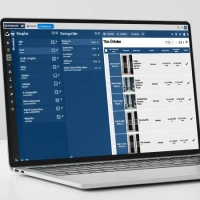
Comwize provides an advanced interface that makes all processes accessible from a single screen, allowing managers to understand the system and manage the process more easily. With support for iOS and Android applications, Comwize enables e-commerce stock management independently of time and location, taking on most of the responsibilities typically required and providing you with greater freedom.


LATEST BLOG POSTS

What is B2C Store Management?

B2C store management is the planning, execution, and continuous improvement of all processes from product sourcing to customer delivery for businesses that sell directly to consumers. It encompasses the entirety of product, inventory, ordering, pricing, logistics, and customer service processes; both single-store and chain stores benefit from this structured approach to efficiency.

What is B2C Warehouse Management, Why is it Important, and How can it be Optimized?

B2C warehouse management encompasses the management of all warehouse processes for e-commerce orders, from goods receipt to shipment. Unlike B2B, it operates in an order-centric manner, requiring the handling of fast shipping expectations and high return rates. Effective management ensures lower costs, faster delivery, and customer satisfaction.

Warehouse Management Software (WMS): What is it, its features, and how to choose one?

Warehouse operations are among the primary factors directly impacting success in the e-commerce and retail sectors. This dynamic structure, encompassing everything from inventory tracking to order picking, can lead to significant time and cost losses when managed manually. In this article, we examine how businesses can make their warehouse processes more efficient and error-free by digitizing them, and we provide a detailed overview of the advantages offered by modern warehouse management systems and Comwize's software solution in this area.

What is CRM Software? Best CRM Solutions with Comwize

Today, businesses' customer management, sales processes, and marketing strategies have become more complex than ever. CRM software has become a critical tool for companies looking to streamline these complex processes under one roof. Below, we will examine it from a broad perspective, starting from the basic concept of CRM software and ending with how Comwize software integrates and provides advantages.

What is a Shipment Management System?

A shipment management system is software that plans, monitors, and reports the entire logistics process from order departure from the warehouse to delivery to the customer, all from a single platform. It includes loading planning, route optimization, live GPS tracking, and automated post-delivery reporting; when integrated with an ERP and warehouse management system (WMS), the order-shipment cycle is managed from a single dashboard.

Comprehensive Digital Solutions Specific to the Curtain Industry

The curtain and home textile sector has its own dynamics such as product variety, the need for custom production and the importance of visual presentation. Traditional trade models are being replaced by the dynamic and competitive world of online platforms. In this transformation, it is critical for businesses to offer their customers a unique digital experience. Comwize B2C responds to this need as a comprehensive e-commerce platform specifically designed for the curtain and home textile sector.

Setting Up a Curtain Sales Website: A Profitable Guide

A curtain sales website is an e-commerce platform where custom-made curtains and home textile products are sold online. The right infrastructure selection, product images, payment/shipping integration, and inventory management are essential for setup; cost calculation and a sound profit margin strategy are crucial for maintaining profitability.

What is e-export? Why e-export?

E-export is the sale of products and services directly to consumers abroad through digital platforms. Compared to traditional export, it has shorter customs clearance times (24-48 hours), lower investment costs, and is supported by government incentives. Customs duty liability is determined by choosing DDP or DDU type of delivery.

E-export ERP Software

Success in e-export isn't just about shipping products; it requires effective management of all processes, from logistics and taxation to inventory and customer management. This is where ERP software comes into play, allowing you to control your e-export operations from end to end.

What is E-commerce? A Comprehensive Beginner's Guide

E-commerce is a digital commerce model that refers to the buying and selling of goods and services over the internet. It has different models such as B2C, B2B, C2C, and D2C; offering advantages such as low cost, 24/7 sales, and wide market access. Getting started requires company formation, selection of sales channels, and product/stock setup.

What is E-Commerce ERP? B2C ERP Guide

An e-commerce ERP system is a software system that allows businesses to manage their marketplace, website, and physical store sales, along with order, inventory, warehouse, accounting, and production processes, all on a single platform. When choosing a B2C e-commerce ERP program, criteria such as data security, real-time accounting, mobile accessibility, and website integration should be considered.

Setting Up an E-Commerce Website: A Step-by-Step Guide

To set up an e-commerce website, you need to determine your product selection, domain name, company registration, shipping agreements, technical infrastructure, and payment methods. Comwize's ready-made e-commerce infrastructure accelerates technical steps such as payment and search engine optimization, allowing businesses to focus on product and shipping decisions.

What is E-Commerce ERP Software?

As e-commerce operations grow, manual management of processes such as orders, inventory, customers, accounting, and shipping leads to both lost time and errors. This is precisely where ERP software comes into play, bringing all business processes under one roof and providing businesses with speed, efficiency, and control. So, what exactly is e-commerce ERP software, why is it important, and how can it transform your business? In this article, you can find the answers to all these questions and discover the power of the right infrastructure for sustainable success in digital commerce.

E-commerce Packages: A Selection Guide

Three key criteria to consider when choosing an e-commerce package are infrastructure (responsive design, multi-site management), integration (combining sales, operations, finance, and website processes in a single system), and scalability (staff segmentation, branch management). The right choice should be made according to the business's growth plan.

E-Commerce Market Research

It's crucial for any business striving to achieve success in e-commerce to first conduct e-commerce market research using the right tools and statistics. E-commerce market research is a process that allows us to develop strategies based on the findings obtained by tracking potential customers' preferences, consumption habits, and pricing approaches. To understand this entire process, it's important to define various concepts from the outset.

TürkçeEnglish